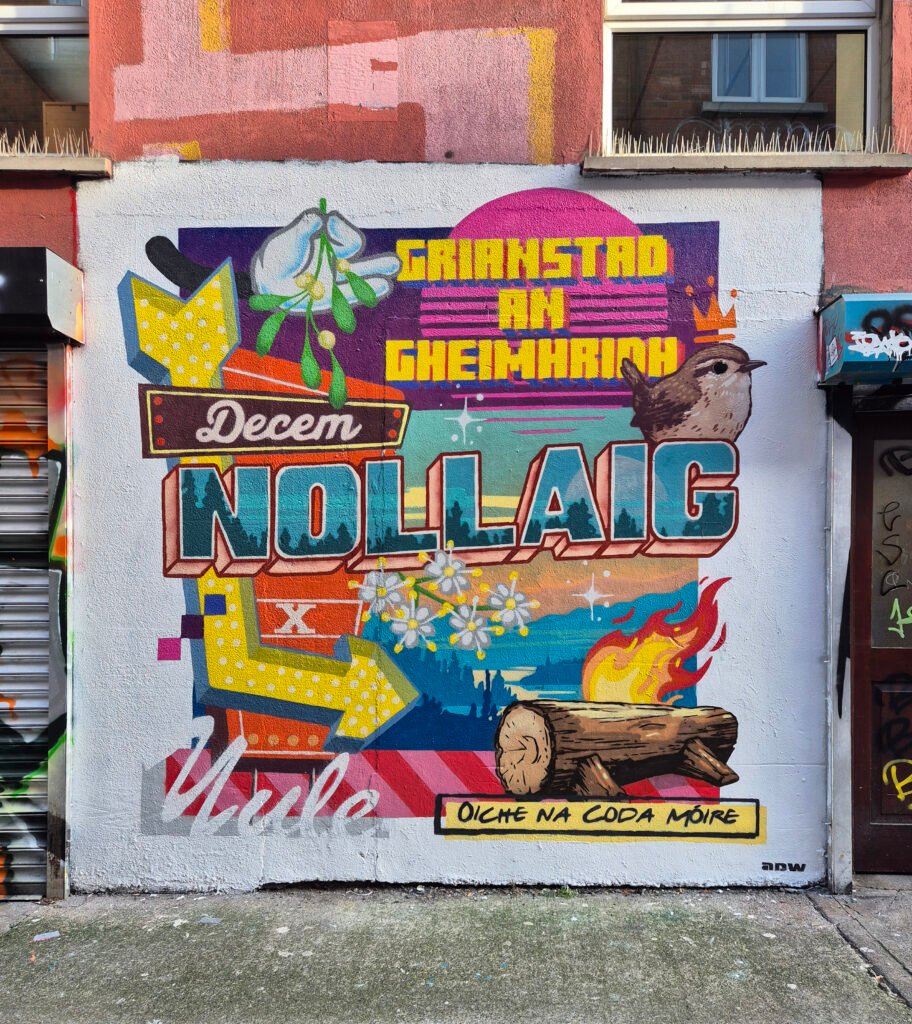
This month’s final chapter of The Calendar Series dives into the traditions, mythology, and rituals woven through December, rooted in both Celtic heritage and its ancient Roman beginnings.
In Irish, December is Nollaig, from the Latin word for “birthday,” tied to the birth of Christ. Though early Christians first marked this in spring, the celebration later shifted toward the winter solstice, a time too significant in older traditions to erase.
Across the ancient world, the winter solstice was a moment of magic: the shortest days of the year, when the sun seemed to pause in the sky. Solstice comes from the Latin solstitium—“sun standing still.”
In Irish, it’s grianstad (GREE-un-stad), a word with the same meaning.
Celtic myth tells of a yearly battle between two mighty figures:
The Oak King — light returning
The Holly King — darkness reigning
At the winter solstice, the Oak King rises victorious, and daylight slowly begins its climb back toward summer.
December traditions echoed this turning point:
The Yule Log, burned for up to 12 days to welcome the reborn sun. Its smoke protected homes, and a fragment was saved to spark next year’s fire.
Mistletoe, gathered from sacred oak trees, hung as a symbol of blessing, luck, and fertility.
And then comes Wren Day,26 December, an Irish and Manx custom. Traditionally, “Wrenboys” in straw masks and colourful costumes paraded through the village carrying a wren, the “king of birds,” in exchange for song, music, and donations to ensure prosperity for the coming year.
In the Celtic tree calendar, Elder rules the thirteenth moon, closing out the cycle and ushering in renewal.
And finally, a nod to Rome: December, from decem (“ten”), was once the tenth month of the Roman calendar, before time itself was rearranged.
You can view the previous month HERE.